

Homeowners ask us about gutter guards all the time, and the first question is usually which kind to get. Every guard is designed to keep debris out of the gutter while letting rainwater in, but they don’t all stop the same kind of debris. The guard that works well on one house can be the wrong choice on the house across the street.
We install two types of gutter guards: Expanded Steel (Roll Lock) screen and micro-mesh. Both fit over seamless gutters, both reduce how often the gutters need attention, and both have situations where they’re the better pick. The difference comes down to what’s falling on your roof.
How Gutter Guards Keep Debris Out
A gutter guard covers the open top of the gutter. Rain runs off the shingles, passes through the openings in the guard and drops into the trough, while leaves and larger debris stay on top where wind and gravity can clear them. The size of those openings is what separates one type of guard from another.
Larger openings let more water through quickly, but they’ll also let smaller debris slip in. Finer openings block more debris but rely on the surface staying reasonably clear to keep water moving. Every guard is a trade-off between those two things, and choosing well means matching the trade-off to the trees and roof above your gutters.
Expanded Steel (Roll Lock) Gutter Screens
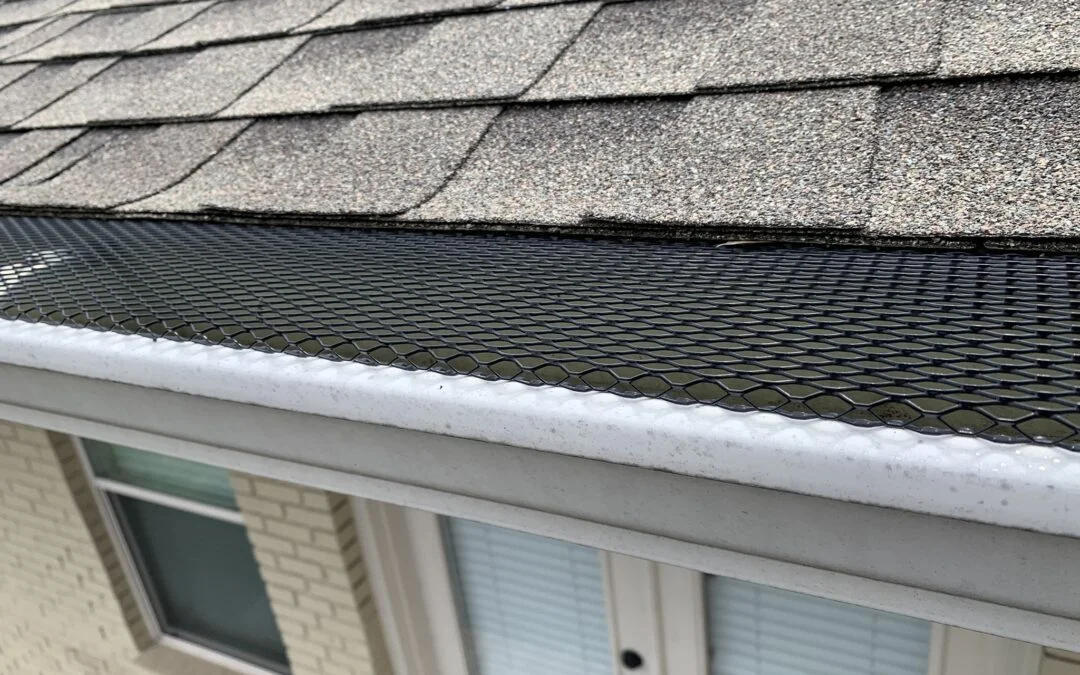
Expanded Steel (Roll Lock) screen is a sturdy metal screen with diamond-shaped openings. It’s the more economical of the two options, starting at $5 per foot, and it’s very good at its main job: keeping whole leaves, twigs and other larger debris out of the trough. That’s the debris that causes most overflows, because it packs together and blocks the outlets.
Screens have limits. Small seeds, roof grit and other fine material can pass through the openings and settle in the gutter over time. Under heavy leaf fall, leaves can also mat on top of the screen. The gutter underneath stays mostly clear, but a thick mat can shed water off the front edge during a hard rain. On homes with a lot of trees over the roof, that means the screen needs an occasional sweep, or micro-mesh is worth considering.
Micro-Mesh Gutter Guards
Micro-mesh gutter guards use a fine stainless or aluminum mesh stretched over a supporting frame. The openings are small enough to stop most of what a screen lets through, including small seeds, flower bits and much of the grit that washes off asphalt shingles. Micro-mesh starts at $10 per foot.
The fine mesh is what makes it effective, and it’s also why it still needs a look now and then. Pollen, fine grit and small debris can collect on the surface. Rain usually rinses much of it away, but in dry stretches a light film can build up and slow the water down. A gentle brushing clears it. For most homes under significant tree cover, micro-mesh keeps the gutter itself cleaner than a screen can.
Comparing Screen and Micro-Mesh Gutter Guards
Here’s how the two guards line up on the points homeowners ask about most:
- Whole leaves and twigs: both keep them out of the gutter.
- Small seeds, needles and roof grit: micro-mesh blocks most of it, while screen lets some through.
- Starting price: screen from $5 per foot, micro-mesh from $10 per foot.
- Upkeep: screens may need debris swept off the top; micro-mesh may need an occasional brushing.
- Best fit: screen for homes with moderate leaf fall and larger debris; micro-mesh for heavy tree cover and fine debris.
Neither guard makes a gutter maintenance free, and we won’t tell you otherwise. What a good guard does is cut down how often the trough fills up and lower the chance that a clog causes an overflow in the middle of a storm. You can see more about the products and process on our gutter guards page.
Choosing Gutter Guards Based on Your Trees
The quickest way to choose is to look up. If the trees near your roofline drop mostly broad leaves once or twice a year, a screen usually handles it well and keeps the cost down. If they drop seeds, catkins, needles or other small debris through much of the year, micro-mesh is usually worth the extra cost.
Distance matters, too, and it’s easy to overlook. A home with a single tree at the edge of the yard sees far less debris than a home with branches hanging over the roof. Homes with no trees nearby may still collect roof grit and wind-blown debris, though often not enough to justify a guard at all. If that’s your situation, we’ll say so at the estimate.
What to Fix Before Installing Gutter Guards
A guard protects a gutter. It doesn’t correct one. If a run sags, has lost its pitch or leaks at the corners, those problems carry on under the guard and become harder to reach. Before guards go on, the gutters should be cleaned out, properly sloped toward the downspouts and securely fastened.
It’s worth taking a second look at undersized gutters, too. A guard reduces the open area water has to pass through, so a 5-inch gutter that barely keeps up today may struggle once it’s covered. On homes where we’re installing new gutters anyway, pairing 6-inch seamless gutters with a guard is often the most reliable setup. Our gutter guard installation page explains how guards fit into a new installation.
Choosing Gutter Guards in Lewisville, The Colony and Nearby Towns
Whether you’re looking into gutter installation in Lewisville or gutters in The Colony, the choice between screen and micro-mesh comes down to what’s above your roof. We install both for homeowners in Castle Hills, Hackberry and Hebron.
Farther north, we install guards and seamless gutters for homeowners in Corinth, Lakewood Village and Oak Point. Properties with more trees close to the house may lean toward micro-mesh, while open lots are often well served by a screen. Our Denton County gutter company page covers the full range of services we offer there.
Gutter Guard Questions
Which is better, screen or micro-mesh gutter guards?
Micro-mesh blocks more debris, including small seeds and roof grit, so it keeps the gutter cleaner under heavy tree cover. Expanded Steel (Roll Lock) screen costs less and handles leaves and larger debris well, which makes it a good fit for homes with moderate leaf fall.
Do gutter guards stop gutters from clogging completely?
No guard eliminates upkeep. A good guard greatly reduces how much debris reaches the trough, but debris can still collect on top of the guard, and fine material can find its way in over time.
How much do gutter guards cost?
Expanded Steel (Roll Lock) screen starts at $5 per foot, and micro-mesh starts at $10 per foot. The final price depends on the length of your gutters and the condition of the system they’re going on.
Can you install gutter guards on existing gutters?
Often, yes, as long as the gutters are in good shape, properly pitched and securely attached. If the existing gutters are sagging, leaking or undersized, it usually makes more sense to address that first.
Do gutter guards keep pests out?
Guards can help deter birds and rodents from nesting in the gutter by closing off the open trough. They aren’t a pest control product, but a covered gutter is less inviting than an open one.
Will gutter guards handle heavy rain?
Both guard types are designed to let rainwater through. How they’ll perform in a heavy storm depends on keeping the surface reasonably clear and on the gutter and downspouts being sized for the roof.
Talk to Creative Gutter About Gutter Guards
Creative Gutter has installed gutters and gutter guards across North Texas since 1984, and we hold 4.9 stars across 140+ reviews on Google. We’ll look at your trees, your roof and your existing gutters and tell you which guard makes sense, or whether you need one at all.
Contact Creative Gutter for a free gutter guard estimate, or call 214-324-4674. Our service area includes Dallas, Collin, Denton, Rockwall and Tarrant Counties.