

Gutter Repair in Dallas, TX
Gutter repair in Dallas usually starts with something small that a homeowner notices from the driveway: a run that dips in the middle, a corner that drips long after the rain has stopped, a downspout hanging away from the wall. Each of those has a specific cause, and most of them can be corrected without replacing the system. Creative Gutter repairs residential and commercial gutters across Dallas and the rest of North Texas, and every estimate is free.
A gutter system has a short list of jobs. It catches roof runoff, carries it along a slight pitch to an outlet, and sends it down a downspout to a spot where it can drain away from the house. When any one of those steps stops working, the water goes somewhere it shouldn’t. A good repair finds which step failed and fixes that, so you aren’t paying for sealant on a gutter whose real problem is its slope.
We’ve repaired thousands of gutters for homeowners in Dallas and across North Texas, and the pattern holds from one house to the next: the earlier a problem is looked at, the smaller the repair tends to be.
Gutter Repair in Dallas and North Texas
North Texas is hard on gutters in a few particular ways. The Dallas-Fort Worth area gets somewhere around 37 to 40 inches of rain in a year, and very little of it falls gently. A single storm can drop inches in less than an hour, which loads every hanger, seam and outlet at once. Summer afternoons regularly climb past 100 degrees, so aluminum expands and contracts through a wide range, and that movement works on sealed joints year after year.
Hail and high wind add impact damage and loosened fasteners to the list. Trees over the roof contribute leaves, seed pods and twigs that pack into outlets and hold moisture against the metal. None of this means a gutter system in Dallas is doomed to fail. It means that joints, hangers and downspout connections need attention from time to time, and that a problem caught early is usually a modest repair.
The ground matters too. Much of North Texas sits on expansive clay that swells when it’s wet and shrinks when it dries. A leaking corner or a disconnected downspout puts roof water in one concentrated spot beside the slab, which is exactly the uneven moisture that foundations in this region don’t tolerate well. That’s the practical reason rain gutter repairs shouldn’t sit on a to-do list for a year.
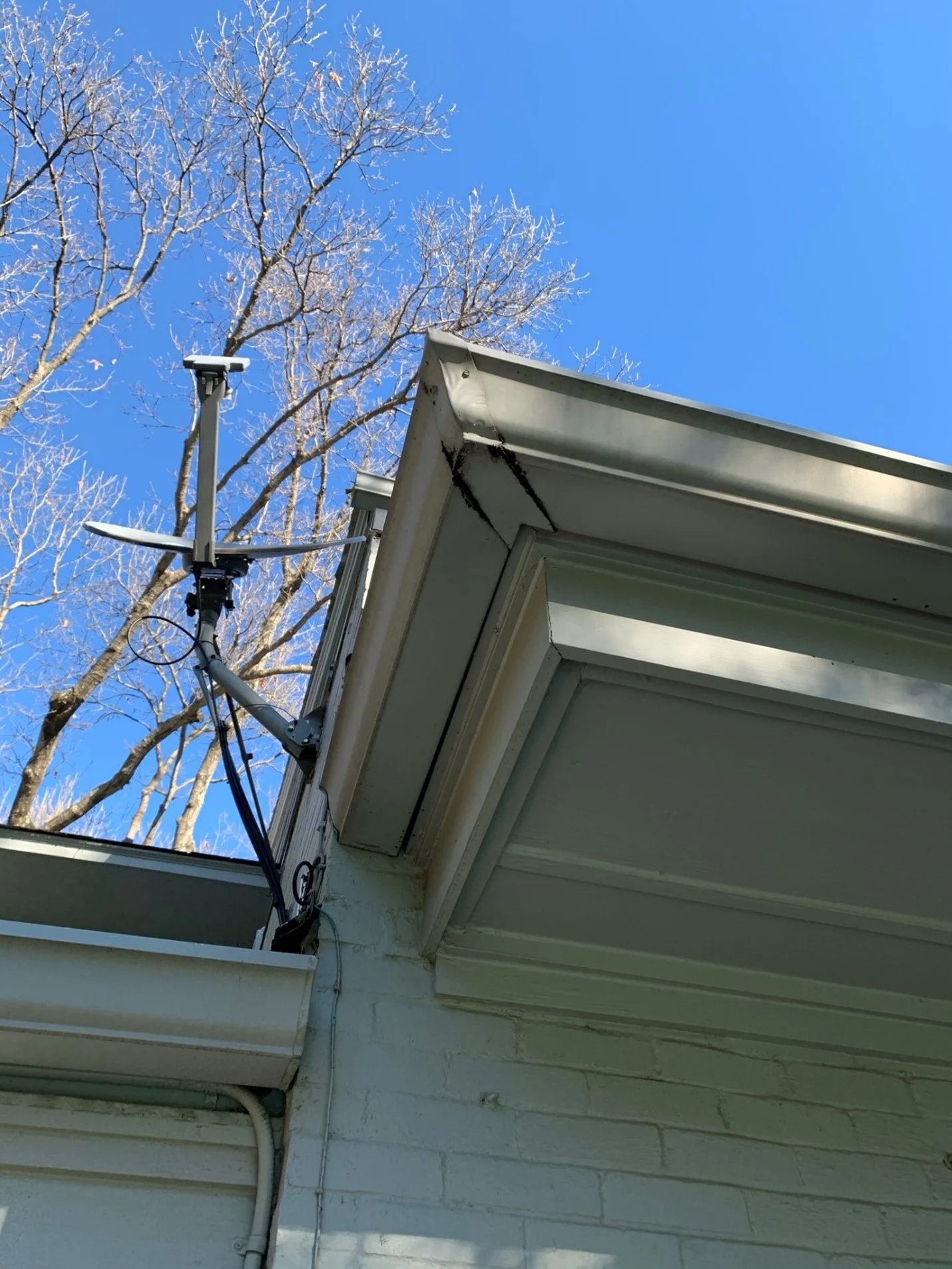
Common Gutter Problems We Repair
Most Dallas gutter repair calls fall into a handful of categories. It’s common to find two of them on the same house, and one is often causing the other, which is why identifying the cause comes before choosing the repair.
Sagging Gutters and Failed Hangers
A gutter that dips or tilts forward has lost support. Older systems were often hung with long spikes driven through the gutter into the fascia, the board the gutter attaches to. Wood swells and dries with the seasons, the spike loosens a little each cycle, and eventually the front edge of the gutter drops. The metal itself is usually fine.
The lasting fix is to re-secure the run with hidden hangers, which sit inside the gutter and fasten with screws that grip far better than a smooth spike. Where hangers have bent or broken under the weight of debris and standing water, they’re replaced. If the fascia behind the gutter is soft, that’s a sign water has been overflowing or running behind the gutter for a long time, and the new fasteners need sound wood to hold.
Gutters That Hold Water or Drain the Wrong Way
Every run needs a slight, steady fall toward its downspout. When a section sags between hangers, or when a run was hung level to begin with, water pools in the low spot and stays there for days. Standing water adds weight, breeds mosquitoes, collects sediment, and keeps the nearest seam wet around the clock. A line of grit along the inside of the gutter during dry weather is the giveaway.
Re-pitching means loosening the run, resetting its height along the fascia so the water moves toward the outlet, and fastening it again. It’s one of the more effective repairs available, because a gutter that drains completely puts far less stress on everything else.
Leaking Corners, Seams and End Caps
Seamless gutters have joints only at corners, end caps and outlets, and those joints are where leaks begin. A corner, called a miter, is two pieces joined and sealed. Years of heat, movement and sitting water break that seal down. You’ll often see the evidence as a dark streak on the brick or siding below the corner instead of an obvious drip.
Older sectional gutters have a seam at each point where one length joins the next, and each one is a potential leak. Resealing a miter or a seam works well when the metal around it is sound and the joint is cleaned and dry before new sealant goes on. An end cap that has worked loose or split is replaced. When the same joint keeps leaking, the usual culprit is standing water from poor pitch, and that gets corrected alongside the seal.
Overflowing Gutters
Water pouring over the front of a gutter has three likely explanations. The gutter or its outlet is clogged, the run is pitched away from the downspout, or the system is too small for the roof area draining into it. The first two are repairs. The third is a capacity question, and it’s typically answered by adding a downspout, enlarging the existing ones, or moving that stretch up to a 6-inch gutter, which carries roughly 40 percent more water than a 5-inch.
Overflow that happens only at the bottom of a roof valley is a special case. A valley concentrates runoff from two roof planes into one fast stream that can overshoot the gutter entirely. That’s addressed by how the gutter is positioned and sized at that spot, so it’s worth mentioning when you call.
Hail Dents, Limb Strikes and Wind Damage
Aluminum doesn’t rust, but it does dent. Light hail leaves dimples along the top edge and front face that are cosmetic and don’t change how the gutter carries water. Larger hail, a fallen limb or a ladder leaned in the wrong place can crease the gutter, flatten a section so it no longer holds its shape, or open a joint. Wind can peel a poorly fastened run away from the fascia. Creased and crushed sections are generally replaced, since bent aluminum doesn’t return to its original profile.
Gutters Pulling Away From the House
A visible gap between the back of the gutter and the fascia lets water run behind the gutter and down the wall. It’s caused by failed fasteners, by the weight of debris, or by wood that no longer holds a screw. Catching it early matters, because water behind the gutter is what softens fascia in the first place, and a wider gap lets in more water with every storm.
Downspout Repair for Loose, Crushed and Clogged Downspouts
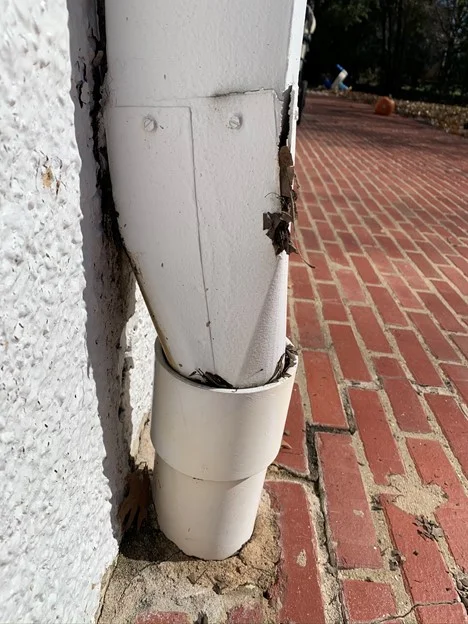
Downspout repair comes up often, partly because downspouts sit at ground level where lawn equipment, vehicles, pets and kids can reach them. A downspout is a chain of pieces: the outlet in the gutter, an upper elbow or two, the vertical pipe strapped to the wall, and a lower elbow that turns the water out onto a splash block or extension. It can come apart at any of those connections.
When the upper elbows separate, water from that whole stretch of roof falls straight down the wall and lands at the foundation. Reattaching the downspout, replacing the straps that hold it to the wall and refastening the elbows restores the path. Crushed lower sections are common and restrict flow more than they appear to, so a flattened elbow or pipe section is swapped for a new one.
Clogs tend to form at the outlet and in the first elbow, where debris has to make a turn. A clogged downspout backs water up into the gutter until it spills over the nearest low point, which is why a blockage is often mistaken for a leak. Downspout unclogging starts from a $250 minimum charge, the same as gutter cleaning and cleanouts.
Sizing is the other half of downspout repair. A 3×4 downspout moves about twice the water of a 2×3, and many houses were built with downspouts that are too few or too small for the roof they serve. If a long run overflows in every hard rain even when it’s clean, a larger or additional downspout is often the real correction. New 2×3 aluminum downspouts start at $7 per foot and 3×4 at $8 per foot, and all downspout work carries a $250 minimum.
Where the water lands matters as much as how it gets down. A downspout that empties right at the slab undoes much of the system’s work. Above-ground downspout extensions, which start from a $250 minimum, carry the discharge out to where the yard slopes away. What we install runs above ground, and if your lot needs the water taken further than that, raise it at the estimate so we can talk through the options.
Rain Gutter Repair by Material and Profile
Rain gutter repair isn’t identical from one system to the next. The material and the shape of the gutter decide which repairs are practical and how a patch will look once it’s finished.
Seamless Aluminum K-Style Gutters
K-style seamless aluminum is the most common residential gutter on homes in Dallas, and it’s the most repair-friendly system. Runs can be re-hung, re-pitched and resealed, and a damaged stretch can be cut out and replaced. Because seamless gutters are formed on site to the length of each run, a replacement section can be made to the measurement needed. The practical limits are appearance and joints: a new piece next to sun-faded gutter may not match perfectly in color, and splicing a section into a seamless run adds a seam where there wasn’t one.
Copper Gutter Repair
Copper needs very little maintenance and develops a patina as it ages, so a new copper section will look brighter than its neighbors for a while before it darkens. The rule that matters most in copper rain gutter repair is compatibility. Aluminum should never be placed against copper, because the two metals react where they touch and the aluminum corrodes. Hangers, fasteners and downspout parts on a copper system need to be compatible with it.
Half-Round Gutters and Older Sectional Systems
Half-round gutters, found on older and architectural homes, hang from exposed brackets, so repair usually involves resetting or replacing brackets and correcting the pitch. Older sectional gutters of any shape have many seams, and when several of them leak at once, sealing them one by one becomes a repeating expense. That’s often the point where a rain gutter repair conversation turns into a replacement conversation.
Why Prompt Gutter Repairs Protect the Rest of the House
Across Dallas and North Texas, a gutter problem rarely stays the same size. A low spot holds water, the weight pulls the next hanger, the sag deepens, and the seam sitting in that puddle begins to leak. Water that escapes the system then starts working on parts of the house that cost far more than gutters do.
- Fascia and roof edge. Water running behind a gutter soaks the fascia board and the ends of the roof decking. Wood that stays damp goes soft, and soft wood won’t hold a gutter.
- Siding, brick and trim. Overflow and leaking corners leave streaks, feed mildew, and wear paint off trim and window frames below.
- Foundation. Roof water dumped beside the slab saturates clay soil in one area while the rest stays dry, and uneven soil movement is hard on foundations. Correcting that can run into the thousands.
- Landscaping and walkways. A concentrated stream off a roof edge washes out mulch and soil, erodes beds, and leaves slick algae on concrete.
Set against those outcomes, re-securing a run or sealing a corner is a small repair. Repairs also help a sound system reach its full service life, which is the most economical result for any homeowner.
Gutter Repair or Gutter Replacement: How to Decide
Dallas homeowners often ask us whether an aging system deserves more money. Repair is the right call when the gutter itself is in good shape and the trouble is confined to a few places. A seamless aluminum system with one leaking miter, a loose downspout and a run that needs re-pitching has many years left in it once those items are handled.
Replacement starts to make more sense when the problems are everywhere at once. The signs include seams leaking along most runs of a sectional system, metal that’s creased or bent out of shape in several places, widespread hail damage that has deformed the gutter, gutters too small for the roof so they overflow even when they’re clean, and fasteners that no longer hold along whole elevations. At that stage, each repair buys a short reprieve on a system that will keep asking for more.
There’s also a middle path. One elevation can be replaced while the rest of the house is repaired, which makes sense when a single side took the limb strike or faces the afternoon sun. We’ll tell you plainly which category your system falls into. If a new system turns out to be the better investment, our gutter replacement page explains sizing, materials and what an installation involves. Should you go that route, a new system is backed for 5 years on our workmanship, and the manufacturer stands behind the materials for 20.
What Gutter Repair Costs in Dallas
Pricing for gutter repair in Dallas depends on what’s wrong, how much of it there is, and how difficult the gutter is to reach. Each of the following repairs starts from a $250 minimum charge:
- Re-securing a sagging run
- Re-pitching a run so it falls correctly toward the downspout
- Resealing a miter or corner
- Sealing a leaking seam or joint
- Replacing hidden hangers
- Replacing an end cap
- Reattaching a downspout
Those are starting prices, not fixed ones. A two-story elevation, a steep roof, a long run with many failed hangers or several repairs on one visit will all move the figure. Replacing a damaged stretch of gutter is priced from measurements of the actual run, so we don’t publish a number for it.
Your quote is written and itemized, and it comes from actual measurements of your home. You’ll see what each repair costs before you decide, and you’re free to do all of it, part of it or none of it.
How Our Gutter Repair Service Works
Our gutter repair service follows a straightforward approach. We inspect, identify the issue, and tell you what it takes to correct it. The scope depends on the job, since a single loose downspout and a house with four sagging runs are very different visits.
It helps to tell us what you’ve observed when you call. Useful details include where water comes over during heavy rain, which corner drips, whether the problem is new or has been building, and whether the home is one or two stories. Symptoms point toward causes. A stain below a corner suggests a miter, overflow at mid-run suggests pitch or a sag, and water behind the gutter suggests fasteners or fascia.
Once you approve the written quote, the repair is carried out and the site is left clean. Repairs that count as maintenance work, meaning seams sealed, runs re-pitched, hangers added and runs re-secured, carry our 2-year warranty. That term is separate from the installation warranties, which apply only to new systems.
Storm Damage and Emergency Gutter Repairs
Most gutter problems on Dallas homes can wait a reasonable time for a repair visit. A few shouldn’t, such as a run hanging loose over a walkway or driveway, or a downspout torn off above an entry so that roof water pours onto the steps. If a storm has left your gutters in that condition, stay clear of the hanging section, keep off the ladder, and call us.
After hail or high wind, walk the house from the ground and look along each run for sections that have dropped, corners that have opened, and downspouts that have shifted or separated. Dents alone are usually cosmetic. Our emergency gutter repair page goes into more detail on which situations are urgent and which can safely wait.
Keeping Repaired Gutters Working With Cleaning and Guards
A repair on a Dallas home can often be traced back to debris. Packed leaves hold water, water adds weight, and weight pulls hangers and opens seams. Our recommendation is to have gutters cleaned 1 to 3 times a year. Where a house falls in that range comes down to the tree cover above the roof, what kind of trees they are, and the storms that season brings.
Gutter guards reduce how much debris gets in, which means fewer clogs and less standing water. We offer two types. Expanded Steel (Roll Lock) screen starts at $5 per foot and handles leaves and larger debris, and micro-mesh in stainless and aluminum starts at $10 per foot and blocks finer material like seeds and shingle grit. Guards belong on a system that’s already sound, so repairs come first. Guarded gutters still need an occasional check.
Cleanouts and repairs are different scopes of work and are priced separately. Our gutter maintenance page covers the tune-up side, including resealing, re-pitching and re-securing, for systems that are aging but still worth keeping.
Commercial Gutter Repair for Dallas-Area Buildings
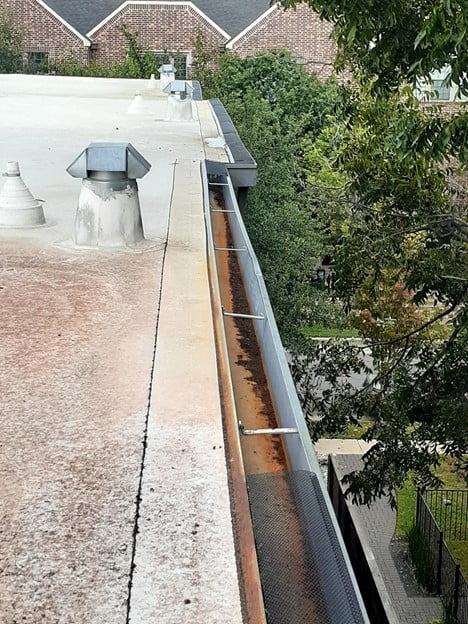
Commercial buildings carry larger roofs, longer runs and bigger downspouts, and the consequences of a failure are larger as well. Commercial gutter comes in 10-foot or 20-foot sections instead of being formed on site, which means it has joints along every run, and those joints are where leaks show up first. Long spans also put heavy loads on their supports when outlets clog and water backs up.
For commercial properties in Dallas and the surrounding counties, we repair box gutters, large downspouts and high-capacity gutter systems on offices, warehouses, retail centers and apartment buildings. Typical commercial repairs include sealing leaking joints, re-securing sections that have pulled loose, correcting pitch along long runs, and replacing damaged or undersized downspouts. On the commercial side, downspout pricing begins at $20 per foot and carries a $300 minimum. Property managers can call 214-324-4674 to set up a free estimate.
How to Choose a Gutter Repair Company in Dallas-Fort Worth
Searching for “gutter repairs near me” or “downspout repair near me” returns a long list of names, and it’s hard to tell them apart from a results page. A few things separate a dependable gutter repair company from the rest. Look for one that works on gutters every day instead of as a sideline, is fully insured, puts its quote in writing, and explains the cause of the problem along with the price.
Our company has been family owned and operated since 1984, and we work out of 1515 Fuller Dr in Dallas. Over more than 40 years we’ve installed thousands of gutter systems across North Texas and repaired thousands more, so very little about how gutters fail here is new to us. Customers have given us 4.9 stars across 140+ reviews on Google, and we’re fully insured.
Being a full-service gutter repair company also means we aren’t limited to patching. We form seamless aluminum gutters on site, install copper and half-round systems, and have the experience, equipment and crew capacity to take a project from start to finish. If your system needs a new section, a larger downspout or a complete elevation, that’s within the same estimate, and our pricing stays competitive.
We’re a local company. Homeowners in Dallas, Plano, Frisco, McKinney, Denton, Rockwall, Arlington and the communities between them are all inside our service area, so a gutter repair company near you in DFW is most likely one call away.
Gutter Repair Questions From Dallas Homeowners
How much does gutter repair cost in Dallas?
Common repairs such as re-securing a sagging run, re-pitching, resealing a corner, sealing a seam, replacing hangers or an end cap, and reattaching a downspout each start from a $250 minimum charge. Height, access and the number of repairs affect the final price. You’ll receive a written, itemized quote before any work begins, and the estimate is free.
Can a sagging gutter be fixed without replacing it?
In most cases, yes. Sagging is nearly always a support problem, not a metal problem. Re-securing the run with new hidden hangers and resetting its pitch brings it back into line. Replacement only enters the picture if the gutter is creased or bent where it sagged, or if the wood behind it won’t hold a fastener anymore.
Why does my gutter leak at the corner?
Corners are sealed joints, and the seal wears out with heat, movement and age. Water that sits in the corner because of poor pitch speeds that up. Cleaning the joint and resealing it stops the leak, and correcting the pitch keeps it from returning. A corner that has been bent or pulled apart may need a new miter.
Why do my gutters overflow when they’re clean?
If there’s no clog, look at pitch and capacity. A run that slopes away from its downspout, or sags in the middle, will spill at the low point. If the pitch is right, the system is likely undersized for the roof. Adding a downspout or stepping up from 2×3 to 3×4 downspouts is often enough to solve it.
Do you offer downspout repair near me?
Yes. We handle downspout repair throughout Dallas, Collin, Denton, Rockwall and Tarrant counties. That covers reattaching loose downspouts, replacing crushed elbows and sections, clearing clogs, adding downspouts to long runs, and installing above-ground extensions so the water is released away from the foundation.
Is it better to repair or replace old gutters?
It depends on how widespread the problems are. Isolated issues on a seamless system are worth repairing. Leaks at most seams, damage along multiple runs, or gutters that are too small for the roof point toward replacement. We’ll give you an honest assessment of both options so you can compare them.
Can I repair my gutters myself?
Some homeowners handle small jobs on a single-story house, such as clearing an outlet or refastening a lower downspout strap. Pitch correction, hanger replacement and anything on a second story are better left to a gutter repair service with the right ladders and equipment. Falls from ladders are a real risk, and a run re-hung at the wrong slope creates a new problem.
Do hail dents in gutters need to be repaired?
Small dents are cosmetic and don’t affect drainage. Repair or replacement is needed when hail has creased the gutter, opened a joint, deformed the front edge so guards or hangers no longer seat properly, or crushed a downspout. If you aren’t sure which you have, we can take a look and tell you.
Is there a warranty on gutter repairs?
Our 2-year warranty applies to maintenance-type work, meaning sealing seams, re-pitching, adding hangers and re-securing gutters. New gutter installations are covered differently, with 5 years on workmanship and 20 years from the manufacturer on materials.
How long does a gutter repair take?
That varies with the scope. Reattaching a downspout or sealing one corner is a short visit, while re-hanging and re-pitching several runs on a two-story home takes considerably longer. The time involved becomes clear once the scope of the repair is known.
Request a Free Gutter Repair Estimate in Dallas
If your gutters are sagging, leaking, overflowing or pulling away from the house, these problems tend to grow with each hard rain. Creative Gutter provides prompt, professional gutter repair in Dallas and across North Texas, with free estimates and written, itemized quotes. Call 214-324-4674 or request an estimate online, and we’ll tell you what your system needs. We serve homeowners and businesses throughout Dallas, Collin, Denton, Rockwall and Tarrant counties.
Contact us today to schedule a FREE on-site consultation for gutter installation or repair for your home or business in Dallas, Collin, Rockwall, Denton and Tarrant Counties.
214-324-4674